




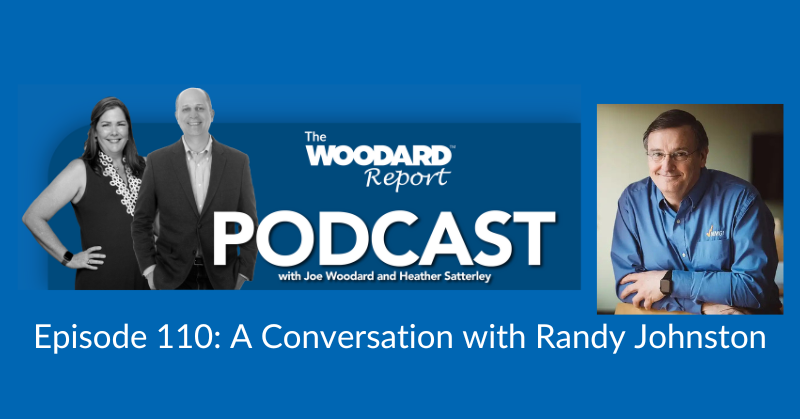
In episode 154 of the Woodard Report Podcast, Heather Satterley welcomed Nancy McClelland, widely known as “the Dancing Accountant,” for a conversation about branding, community, and what it takes to build a practice clients trust.
McClelland’s career spans 24 years running what she calls a “hyper local bookkeeping, accounting, tax, and advisory firm,” and her origin story is exactly as memorable as her nickname.
The brand did not begin as a marketing plan. It started with a client and a moment of choice. As McClelland explained, “A client gave our firm the name ‘The Dancing Accountant,' after she arrived at a neighborhood park event in full 1960s go-go attire to teach kids how to dance and ran into clients picnicking nearby.
Instead of shrinking back, she embraced it. Within weeks, she changed the company name from Nancy McClelland LLC to The Dancing Accountant, aligning her business identity with what her clients already experienced.
Hyperlocal trust in a remote world
McClelland’s “hyper local” niche does not mean her team is all in one office. Her firm operates fully remote with nine team members spread across the country while still staying rooted in supporting small businesses and local economies.
McClelland described how the firm intentionally hires within the U.S. and avoids outsourcing abroad because the work is tied to strengthening communities. Even with a distributed team, she maintains strong in-person relationships with clients in her neighborhood, which gives her a front-row seat to the real pressures small business owners face.
Her perspective is clear: many clients do not just need accurate books, they need confidence, clarity, and someone they can trust to make business feel manageable.
Closing the value gap through niching
Heather raised a practical concern many advisors share: how do you get paid for high-touch service when clients push back on price? McClelland did not deny the challenge. She named it directly: “There is a huge gulf in perception there.”
Her most consistent solution is niching, not as a buzzword, but as a way to build clear, defensible value. In her case, that meant becoming the trusted accounting name in her neighborhood so that when a new business opens, owners ask around and hear the same recommendation.
McClelland emphasized that a niche can be geographic, industry-based, service-based, or even tech-based. Still, the point is the same: become known for something specific, set boundaries, and stop trying to do everything for everyone. When clients understand what you uniquely do, they ask for more of it and they are less afraid to pay for it.
Ask a CPA and the “tax-ready books” bridge
This interview also highlighted McClelland’s Ask a CPA community, which exists to help bookkeepers collaborate effectively with tax practitioners and reduce the friction that shows up every year at tax time.
McClelland shared that she started as a bookkeeper and later became a CPA, and that journey shaped her conviction that this gap is both real and solvable. She was blunt about the problem: bookkeepers often feel hesitant to ask questions, standards for what “tax ready books” means are inconsistent, and tax pros may not have the time to train bookkeepers even though it would help them long-term.
Heather added her own experience from early in her career, describing how CPA firms referred clients to her because she delivered clean books and organized workpapers that made return preparation easier. Together their point was practical and optimistic: when bookkeepers learn what tax teams actually need, everyone wins, including the client, the tax preparer, and the bookkeeping firm that becomes referral-worthy.
The She Counts podcast and making space for real stories
McClelland also discussed a newer project, the She Counts podcast, co-created with Questian Telka. She admitted she resisted podcasting for years because it is “a really time-consuming, expensive thing to do,” but eventually the mission outweighed the workload.
The purpose is to help women in the profession feel less alone by naming experiences that are often carried quietly, including boundaries, burnout, harassment, imposter syndrome, and major life events that collide with career expectations.
McClelland connected the show to a consistent theme across her work: “Everything that I do…is all about making people feel less alone.” She also referenced guidance from speaking coach Misty Megia about “learning to speak from the scar and not from the wound,” explaining that the podcast aims to be both a safe space and a practical resource by offering solutions and next steps rather than simply airing problems.
The future of the profession
McClelland’s message comes clearly: the future of the profession belongs to advisors who combine technical expertise with trust-building relationships. Niching helps close the value gap, collaboration systems make busy seasons less chaotic, and human-centered leadership keeps clients and peers coming back because they feel seen and supported.
In a market where tools will become faster and automation will continue improving, the differentiator will increasingly be the professional who can make complexity feel manageable and help clients move forward with confidence.
Listen to the full episode and subscribe to The Woodard Report Podcast
🎧 Listen to the full episode at woodard.com/podcast.
Enjoyed this episode? Subscribe to The Woodard Report Podcast on your favorite platform for weekly insights that move your practice—and your life—forward.





Thank you to our show sponsor, Woodard™ Membership!
Woodard™ Membership empowers accounting professionals to build scalable, advisory-centric practices through community, education, and mentorship. Members gain access to exclusive resources, collaborative forums, guided implementation programs, and live events designed to accelerate professional and business growth. To learn more about how Woodard™ Membership can support your journey, visit: Woodard Memberships
This article was written with the assistance of AI and edited by a human.





Do you have questions about this article? Email us and let us know > info@woodard.com
Comments: