




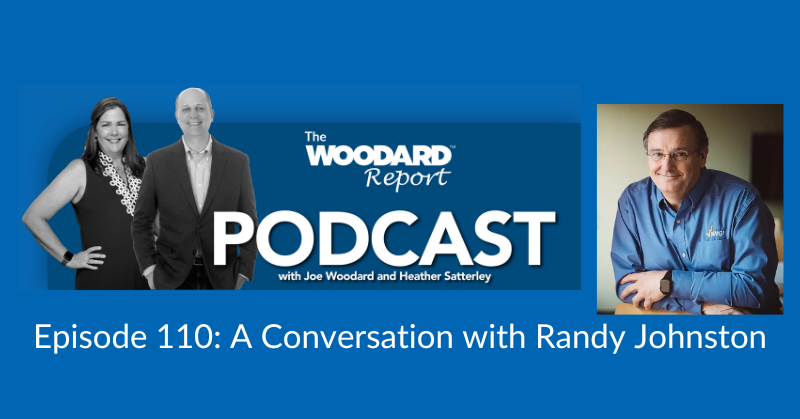
In episode 194 of The Woodard Report Podcast, Heather Day is joined by Patricia Hendrix, Vice President of Communities at Woodard, for a conversation about transition strategies, contingency planning, transferable value, and why practice owners should start preparing long before they think they are ready to step away.
Transition planning is bigger than succession
Patricia explained that succession is only one part of the larger picture. She prefers the term transition strategies because it includes both preparing the practice for someone else to lead it and preparing yourself for whatever comes next. Succession focuses on the practice, while exit planning looks at the owner’s financial, emotional, and personal readiness. Together, they shape the larger transition.
Heather shared her own experience selling two practices and how neither transition was something she had planned far in advance. Patricia noted that when circumstances force a decision, owners usually have fewer options and less time to build the kind of value a buyer may be looking for.

Watch Episode 194 here
Building transferable value
Patricia introduced the idea of transferable value, or the parts of a practice that remain valuable even when the owner is no longer involved. That can include strong client relationships, contracts, vendor agreements, intellectual property, and documented processes. The more easily a buyer can step into the practice and understand how it operates, the lower the perceived risk and the stronger the practice may be positioned for a future transition.
Heather and Patricia also discussed how easy it is for owners to think of the practice as a job rather than an asset. Patricia shared that she had a similar realization when potential buyers were interested in parts of her practice that could continue without her, but not necessarily the advisory work that depended entirely on her involvement.
Start with the end in mind
For owners who have not started planning, Patricia recommended beginning with what they ultimately want the transition to accomplish. That could mean retirement, starting another business, protecting the team and clients, or creating financial security. From there, owners can look at the gap between where the practice is today and where it needs to be to support that outcome. “If I were preparing this practice to sell, what would I do differently?” Patricia said.
Contingency planning matters too
Heather and Patricia also discussed what happens when an owner suddenly cannot run the practice because of illness, a family emergency, or another unexpected event. Patricia said contingency planning should address practical questions such as who has access, who can run payroll, who has signing authority, and where important information can be found. Without those preparations, the team may be left trying to keep the business operating without the authority or information they need.
Patricia described contingency planning as a gift to your family and your team because it gives them a clear path forward when you are not available.
You do not have to figure it out alone
They also discussed the role community can play in preparing for change. Patricia has seen Woodard members build relationships with other practice owners who are working through similar challenges, sharing ideas, collaborating, and supporting one another as their practices evolve.
Heather shared how finding a community of other accounting professionals early in her career gave her reassurance that many of the challenges she was facing were not unique to her. Patricia said that sense of belonging is one of the most important things Woodard wants members to experience. “Everybody wants to belong. And a lot of people show up feeling very alone.”
Turning learning into action
Patricia also shared how Woodard Membership is structured around learning, implementation, and accountability. Rather than focusing on how to perform accounting work, the courses and coaching programs focus on building and running a stronger practice.
Topics include transition strategies, productivity, management, leadership, technology, growth, and the seven ideals within Woodard’s Ideal Practice Model.
Heather and Patricia discussed how these programs give members a framework for identifying where their practice needs attention, deciding what to address first, and working alongside others who are doing the same.
Listen to the full episode and subscribe to The Woodard Report Podcast
🎧 Listen to the full episode at woodard.com/podcast.
Enjoyed this episode? Subscribe to The Woodard Report Podcast on your favorite platform for weekly insights that move your practice—and your life—forward.





Thank you to our show sponsor, Canopy!
Unclunk your firm with Canopy, the fully integrated practice management that helps accountants build the firm they always wanted. The suite includes client and document management, workflow, time and billing, engagements and proposals, and more. Check out getcanopy.com.
This article was written with the assistance of AI and edited by a human.





Do you have questions about this article? Email us and let us know > info@woodard.com
Comments: