


.png)

The accounting profession has certainly become a Strange New World, and in response, the programming at Scaling New Heights 2026 has been specifically curated for just this moment. The 18th annual conference will take place at the Orlando World Center Marriott, June 14 – 17, bringing together accountants, bookkeepers, and consultants for tailored, practical education.
This year’s program is designed to help attendees respond confidently to major industry disruptions, including the growth of private equity, ongoing staffing shortages, generational shifts in the workforce, and the expanding role of artificial intelligence.
Artificial intelligence is now a present reality for accounting firms and is increasingly integrated into existing tools, including document capture, general ledger workflows, client communications, and advisory services. As these capabilities grow, the focus is shifting from whether to adopt AI to how to do so responsibly, securely, and with improved outcomes.
This context informs the comprehensive AI track at Scaling New Heights 2026. The program helps accounting professionals develop practical skills and decision frameworks, especially for firms evaluating AI, piloting automation tools, or expanding early successes across their organizations.
Readers who want to explore the full training schedule can view it here: Scaling New Heights 2026 Sessions
A featured perspective on work, technology, and professional services
Sunday, June 14 will open the AI track with morning breakout sessions, followed by a keynote from Dr. Daniel Susskind. He will discuss themes from his best-selling book, A World Without Work, and his research on technology’s impact on labor markets and professional services.
This perspective is especially relevant for accounting professionals, whose work relies on rules, judgment, trust, and accountability. While automation can improve speed and consistency, human oversight remains essential for quality, ethics, and client confidence.
The opportunity extends beyond performing tasks faster. It involves reassessing which tasks should remain manual, which can be systematized, and how professional roles will evolve as AI tools take on more initial production.
From theory to practice: AI strategy for accounting firms
In addition to keynote programming, Scaling New Heights 2026 will offer main stage sessions led by technology partners on AI strategy and practical implementation for accounting practices.
Accounting teams often require clarity in five key operational areas:
- Where AI fits within existing workflows (intake, coding, reconciliation, review, reporting, advisory)
- How to evaluate output quality and define review controls
- What to standardize firm-wide versus allow teams to customize
- How to protect client data and maintain privacy compliance
- How to implement AI without weakening professional judgment
These are practical, operational questions. Practitioner examples and proven decision models can help guide structured AI adoption.
Monday’s firm panel: AI implementation across firm sizes
On Monday morning, Liz Scott, CEO of Accounting Lifeline, will moderate a panel featuring representatives from small, mid-size, and Top 100 practices who will discuss their experiences implementing AI.
Panelists will share best practices regarding firm AI policies and governance, how to prioritize and vet AI solutions and the return on investment (ROI) from their efforts. They’ll also dig into what’s worked well and what could have gone better.
Core AI training led by Randy Johnston
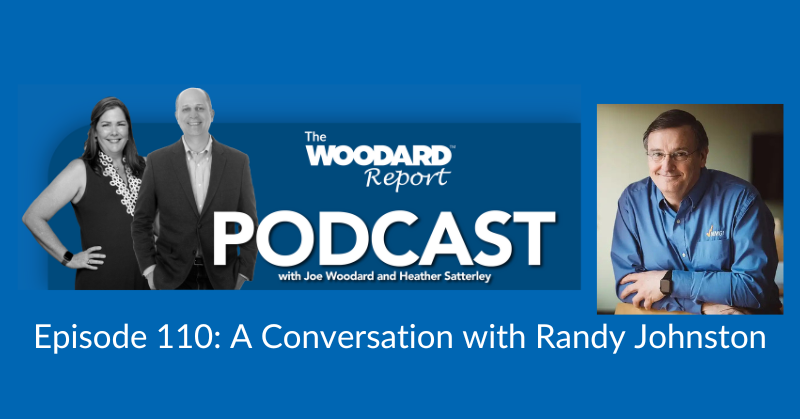
The backbone of the Scaling New Heights 2026 AI track is a structured learning path led by Randy Johnston, co-founder of K2 Enterprises. The sessions move from basic AI concepts to strategies and workflow automation.
Core sessions include:
- AI 101 – Getting Started with AI in Accounting
- AI 102 – Prompt Engineering for Accountants
- AI 201 – Security, Privacy, and AI Governance
- AI 202 – Building an AI Strategy for Accounting Operations
- AI 301 – Workflow Agents and Advanced Accounting Automation
This progression reflects the way many firms adopt AI in practice and is designed to meet firms exactly where they are in their AI journey.
Building AI literacy and prompting skills (AI 101 and AI 102)
To adopt AI early, it’s important to have a basic understanding of how it works. Practice leaders should know the difference between generative AI and rules-based automation, learn how to verify results, and be careful not to trust outputs just because they look polished.
Prompt engineering is key to getting consistent results. Writing clear prompts helps when creating client messages, summarizing accounting updates, outlining procedures, or making internal checklists. Using a structured approach to prompts helps teams stay consistent.
Addressing risk through AI governance (AI 201)
As AI use grows, so do associated risks. Accounting firms manage sensitive financial data, and entering client information into AI tools without safeguards can create vulnerabilities.
An effective AI governance framework often includes:
- Approved tools and usage policies
- Data handling and retention standards
- Documented prompt and review procedures
- Ongoing monitoring of regulatory developments
Integrating AI governance into practice operations strengthens risk management and builds client trust.
Building an AI strategy for operations (AI 202)
Integrating AI into structured workflows provides measurable value. An effective AI strategy may include:
- Selecting defined priority use cases
- Measuring time savings or error reduction
- Documenting review and exception-handling steps
- Assigning control ownership across roles
Examples of use cases include drafting client-ready summaries from financial statements, identifying general ledger anomalies, automating recurring reconciliations, and enhancing advisory preparation processes.
Firms should distinguish between AI used for internal productivity and AI integrated into service delivery. AI in service delivery offers greater potential to transform advisory and client accounting services (CAS).
Introducing workflow agents and accounting automation (AI 301)
Workflow agents are automated systems designed to handle multi-step tasks based on set rules. In accounting, they can help with tasks such as:
- Documenting classification and intake triage
- Exception identification
- Task routing within CAS workflows
- Preparation support prior to human review
The goal is not autonomous accounting, but rather consistent, well-controlled automation that strengthens professional oversight.
Standardizing AI in accounting: firm voice and CAS workflows
Additional sessions focus on how to create a consistent voice across AI tools, including ChatGPT, Anthropic Claude, Gemini, and Microsoft Copilot.
Consistency is essential. Firms that set clear templates, tone guidelines, and documentation standards reduce rework and strengthen brand alignment. This is especially important for CAS practices, where standardized processes and communication enable scalable growth.
Using AI in the right places can make routine tasks easier, improve internal documentation, and give clients a more modern experience, all while maintaining professional standards. These sessions at Scaling New Heights 2026 will address specific use cases and solutions.
A practical next step for accounting professionals
In 2026, most professionals are not aiming to become AI experts. Instead, their goal is to gain the knowledge and tools to navigate this Strange New World of AI by:
- Understanding AI capabilities and limitations
- Integrating AI securely and responsibly
- Applying structured AI governance principles
- Using accounting automation to increase advisory depth and sustainability
The AI track at Scaling New Heights 2026 offers hands-on training, real-world examples from firms, and strategic talks on how AI is changing professional services.
To see the full agenda, visit: Scaling New Heights Sessions
For more details about the conference, check out the Scaling New Heights 2026 overview on the Woodard Report.
This article was written with the assistance of AI and edited by a human.





Do you have questions about this article? Email us and let us know > info@woodard.com
Comments: